

Choosing the right wireless microphone system can feel overwhelming with so many options at different price points. Whether you’re a worship leader managing Sunday services or an event producer coordinating multi-microphone setups, this guide will help you make informed decisions based on your specific needs.
Understanding Your Requirements: Small vs. Large Deployments
Small Setups (1-4 Channels): Do You Really Need to Spend Big?
The short answer: Not necessarily, but investing in quality pays off even at this scale.
For churches using just one or two wireless microphones for speaking and leading worship, you might be tempted by budget consumer options. However, even small setups benefit significantly from professional-grade systems in the $300-600 per channel range rather than $100-200 consumer models.
The number of wireless channels you need fundamentally changes what you should buy. A church running two handheld mics has very different requirements than a conference center managing 15+ wireless systems simultaneously.
Large Deployments (8-15+ Channels): Enterprise-Level Planning Required
Reliability during critical moments – A wireless mic cutting out during a sermon or worship set isn’t just inconvenient; it disrupts the spiritual experience you’re creating. Professional systems offer significantly better RF stability.
Audio quality that matches your message – If you’ve invested in quality speakers and mixers, don’t let poor wireless audio undermine that investment. Professional capsules deliver clarity that consumer mics simply can’t match.
Frequency coordination – Even with 2-4 channels, you need systems that can work together without interference. Professional systems include scanning and coordination features that consumer models lack.
Longevity and support – A $500 wireless system that works flawlessly for 8-10 years costs less per year than replacing $150 systems every 2-3 years.
Mid-Size Setups (5-8 Channels): Where Quality Becomes Critical
Once you cross into 5+ wireless systems, you’re entering territory where professional equipment isn’t optional—it’s essential. At this scale, consumer equipment will almost certainly cause problems.
Key considerations:
- Frequency agility – You need systems that can scan the RF environment and automatically select clean frequencies
- True diversity receivers – Dual-antenna systems that eliminate dropouts caused by movement or interference
- Compatible frequency bands – All your systems must work within the same frequency range for proper coordination
- Channel spacing – Professional systems calculate proper spacing between frequencies to prevent intermodulation
Recommended brands for this range:
- Shure (BLX, QLX-D, ULX-D series)
- Sennheiser (EW-D, 300/500 G4 series)
- Audio-Technica (3000/5000 series)
- Audix (AP series)
How to Purchase a Wireless Microphone System?
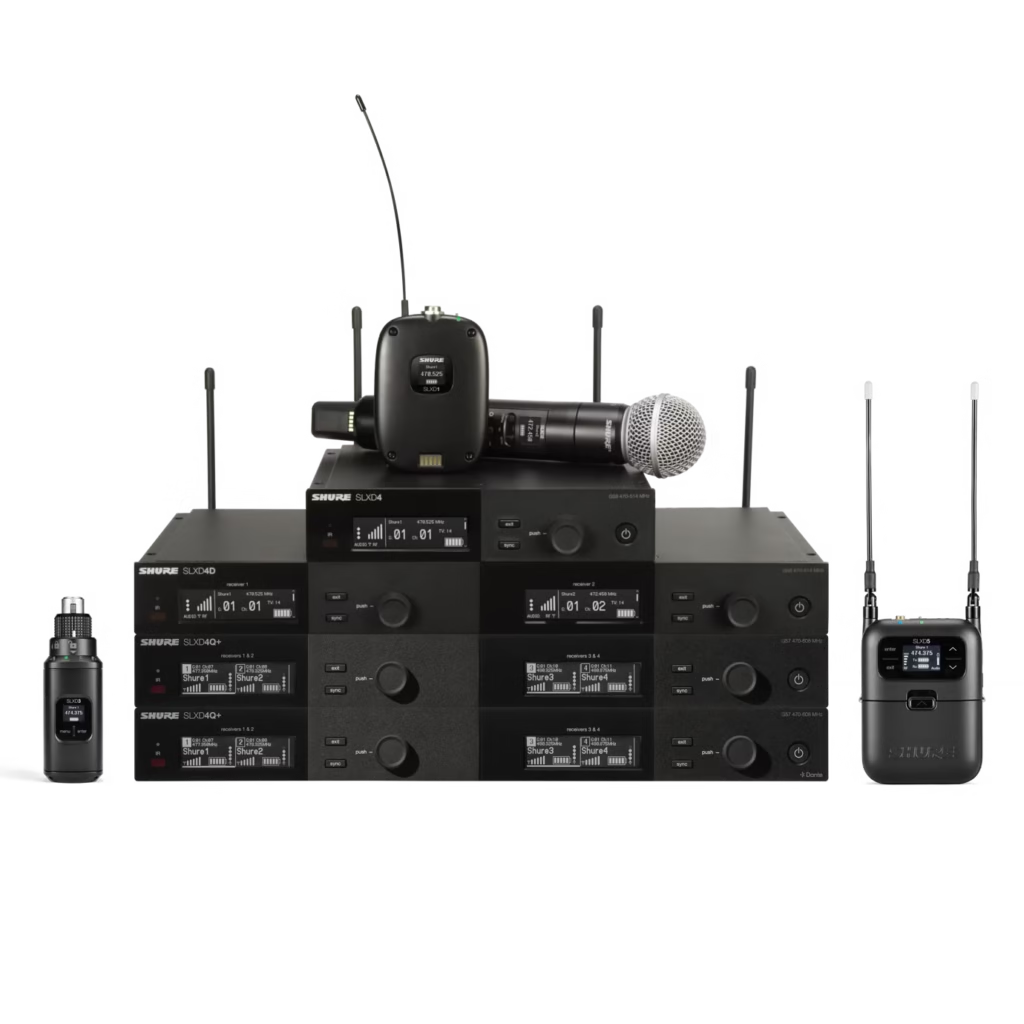
Managing 8 or more wireless systems simultaneously requires a completely different approach. This is common in larger churches with full worship bands, drama productions, or event rental companies serving conferences and concerts.
What to Look For in Multi-Channel Deployments (8+ Systems)
1. Digital or Hybrid Systems
Modern digital wireless systems offer significant advantages for large deployments:
- Increased channel density – More systems in less spectrum
- Encryption – Prevents eavesdropping and unauthorized access
- Built-in coordination – Automatic frequency assignment across all units
- Remote monitoring – Track battery levels and RF status from your mixing position
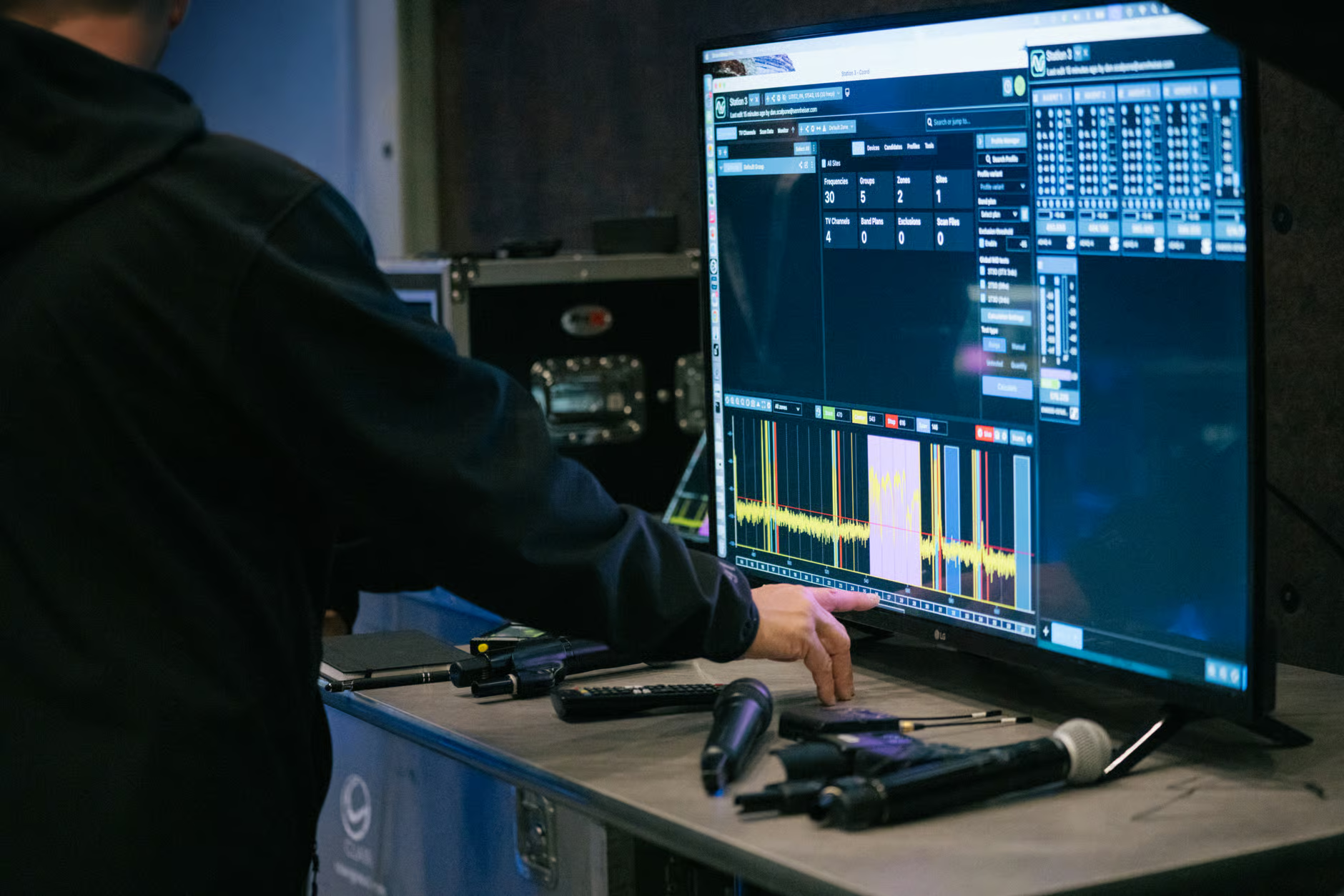
2. Dedicated Frequency Coordination Software
For 8+ channels, you need professional tools like:
- Shure Wireless Workbench
- Sennheiser Wireless Systems Manager
- RF Venue Vantage software
These programs analyze your local RF environment, identify TV stations and other interference sources, and calculate optimal frequencies for all your systems.
3. Proper Antenna Distribution
This is perhaps the most overlooked requirement for reliable large-scale wireless.
When you have multiple receivers, you cannot simply use the individual antennas on each unit. You need:
Active antenna distribution system – Devices like the Shure UA844+ or Sennheiser ASA 1 take signal from strategically placed antennas and distribute it to all your receivers. This provides:
- Consistent signal strength to all receivers
- Reduced interference between receivers
- Cleaner RF environment
- Ability to place antennas optimally rather than being limited by receiver locations
Quality antennas – Directional or paddle antennas placed at the front of your space provide better coverage than the standard whip antennas included with receivers.
Proper cabling – Use quality 50-ohm coaxial cable (like LMR-400) to connect antennas to your distribution system. Standard audio cable will cause significant signal loss.
4. RF Over Fiber (for very large venues)
In spaces like large worship centers or convention halls, you may need to extend your wireless coverage over hundreds of feet. RF-over-fiber systems allow you to place remote antennas throughout your venue, all connected back to your centralized receiver location.
5. Spectrum Management and Coordination
The RF spectrum is increasingly crowded. Professional deployments require:
Frequency coordination before every event – The RF environment changes. What worked last week might not work today. Professional systems let you scan and reassign frequencies quickly.
Intermodulation calculation – When multiple transmitters operate simultaneously, they can create interference at predictable frequencies. Professional software calculates these and avoids them.
Band selection – In the U.S., the UHF spectrum (470-698 MHz) has been shrinking. Make sure systems you buy today use legally available frequencies in your region.
Essential Support Equipment for Reliable Operation
Beyond the microphones and receivers themselves, several accessories dramatically improve reliability:
Antenna Infrastructure
- Antenna distribution amplifiers (required for 6+ systems)
- Remote antenna kits for better coverage
- Antenna combiners for complex installations
- RF-transparent foam windscreens that don’t block signal
Power and Batteries
- Rechargeable battery systems – Companies like Ansmann or proprietary systems from Shure/Sennheiser save money and ensure fresh batteries
- Battery management stations – Track charge cycles and battery health
- AC power distribution with filtering to reduce electrical noise
Monitoring Tools
- Spectrum analyzers – See what’s happening in the RF environment in real-time
- RF coordination software – Already mentioned, but critical enough to list twice
- Remote monitoring systems – Keep track of battery levels and RF status from FOH position
Cable Infrastructure
- Quality coax cable – LMR-400 or equivalent for antenna runs
- XLR cables – Professional analog or Cat5e/6 for digital systems
- Cable management – Proper strain relief and routing prevents failures
Brand Recommendations by System Count
For 1-4 Channels: Reliability Without Breaking the Bank
Budget-Conscious ($300-500/channel):
- Shure BLX – Solid entry point, easy to use, good sound quality
- Audio-Technica System 10 – Digital system at an analog price
- Sennheiser XSW-D – Compact, simple, reliable for smaller spaces
- Audix AP41 – Professional performance at competitive pricing
Professional Grade ($600-1,200/channel):
- Shure QLXD – Industry standard, excellent sound, networked control
- Sennheiser EW-D – Modern digital system with exceptional range
- Audio-Technica 3000/5000 series – Great value in this category
- Audix AP61 – High-performance system with excellent audio quality
For 5-8 Channels: True Professional Systems
At this scale, stick with proven professional brands:
- Shure QLXD or ULXD series
- Sennheiser EW-D or 500 G4 series
- Audio-Technica 5000 series
- Audix AP62 series – Reliable performance for mid-size deployments
All of these offer the frequency agility, coordination tools, and RF performance needed for mid-size deployments.
For 8-15+ Channels: Enterprise-Level Systems
When managing this many channels, invest in the best:
Shure Axient Digital – Industry leader for complex deployments, touring productions, and broadcast. Exceptional density and reliability.
Sennheiser Digital 6000/9000 – Similar capability to Axient, preferred by many in Europe and broadcast applications.
Audio-Technica 6000 series – Strong performer with excellent channel density and reliable RF performance for large-scale installations.
Audix Performance Series (higher channel counts) – Professional-grade reliability for houses of worship and event production requiring dependable multi-channel operation.
For Event Rental Companies
If you’re renting equipment, durability and universal compatibility matter most:
- Shure UHF-R or ULX-D – Tough, reliable, recognized by clients
- Sennheiser 500/500 G4 – Similar reputation and durability
- Audix AP series – Solid build quality and reliable performance
- Stock multiple capsule types (dynamic, condenser, lavalier, headset)
Practical Buying Advice: What Actually Matters
Don’t Skimp On These Features:
- True diversity reception (dual antennas) – Non-negotiable for professional use
- Frequency agility – Must be able to change frequencies to avoid interference
- Metal construction – Plastic transmitters don’t survive professional use
- Removable antennas on receivers – Needed for antenna distribution systems
Features You Can Probably Live Without (At First):
- Encryption – Nice to have, rarely critical in church/event settings
- Dante/AES digital outputs – Analog works fine for most applications
- Rechargeable batteries built into transmitters – Swappable AAs offer more flexibility
Buy As A System, Not Piecemeal
Wireless microphones work as coordinated systems. Buying six different transmitters from various brands at different times creates a coordination nightmare. Plan your maximum future needs and buy a system designed to work together, even if you start with fewer channels.
Consider Frequency Bands Carefully
The 2.4 GHz band (used by some digital systems) offers simplicity but can be crowded in urban areas and some venues. Traditional UHF systems (470-698 MHz) require frequency coordination but offer more reliable performance in complex RF environments.
Make sure any UHF system you buy operates in legal, available spectrum in your region. In the U.S., this increasingly means avoiding the 614-698 MHz range.
The Bottom Line: Is Expensive Worth It?
For 1-4 channels, you don’t need the most expensive systems, but investing in professional-grade equipment ($400-800/channel) versus consumer gear will serve you far better long-term.
For 5-8 channels, quality becomes critical. This is where you need true professional systems with proper coordination capabilities.
For 8+ channels, the most expensive professional systems aren’t a luxury—they’re requirements for reliable operation. At this scale, the cost of failures (ruined services, lost event revenue, damaged reputation) far exceeds the investment in quality equipment and proper infrastructure.
Ready to Build Your Wireless System?
Every church and event production has unique needs based on venue size, typical usage, and growth plans. At John Soto Music LLC, we specialize in helping churches and event professionals build reliable wireless systems scaled to their specific requirements.
We include free comprehensive video tutorials with every wireless system purchase, walking you through setup, frequency coordination, and troubleshooting—so you’re never left guessing how to get the most from your investment.
Need help selecting the right wireless microphone system for your application? Contact us for personalized recommendations based on your venue, channel count, and budget. We’re here to ensure you get reliable wireless audio that serves your ministry or production for years to come.

