

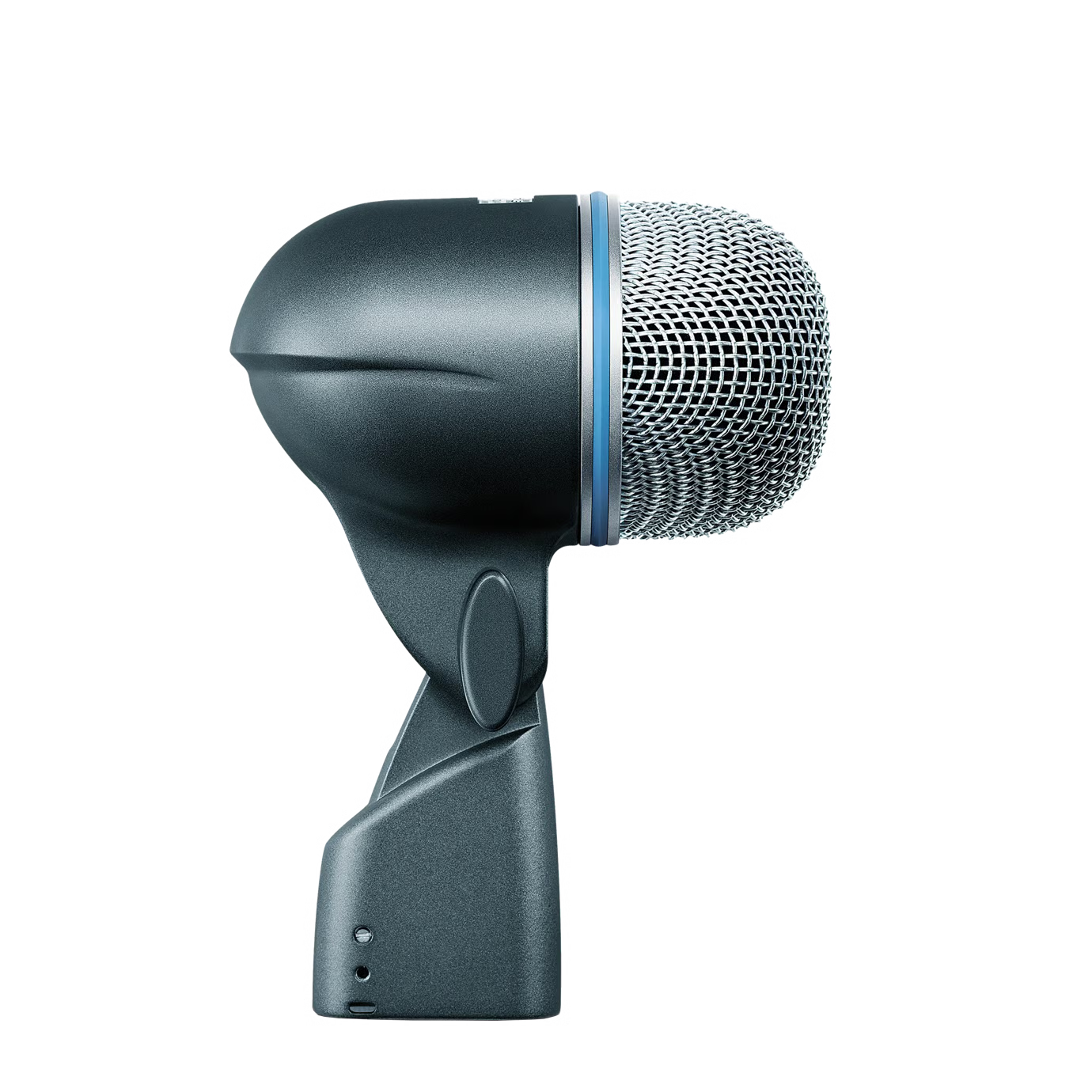
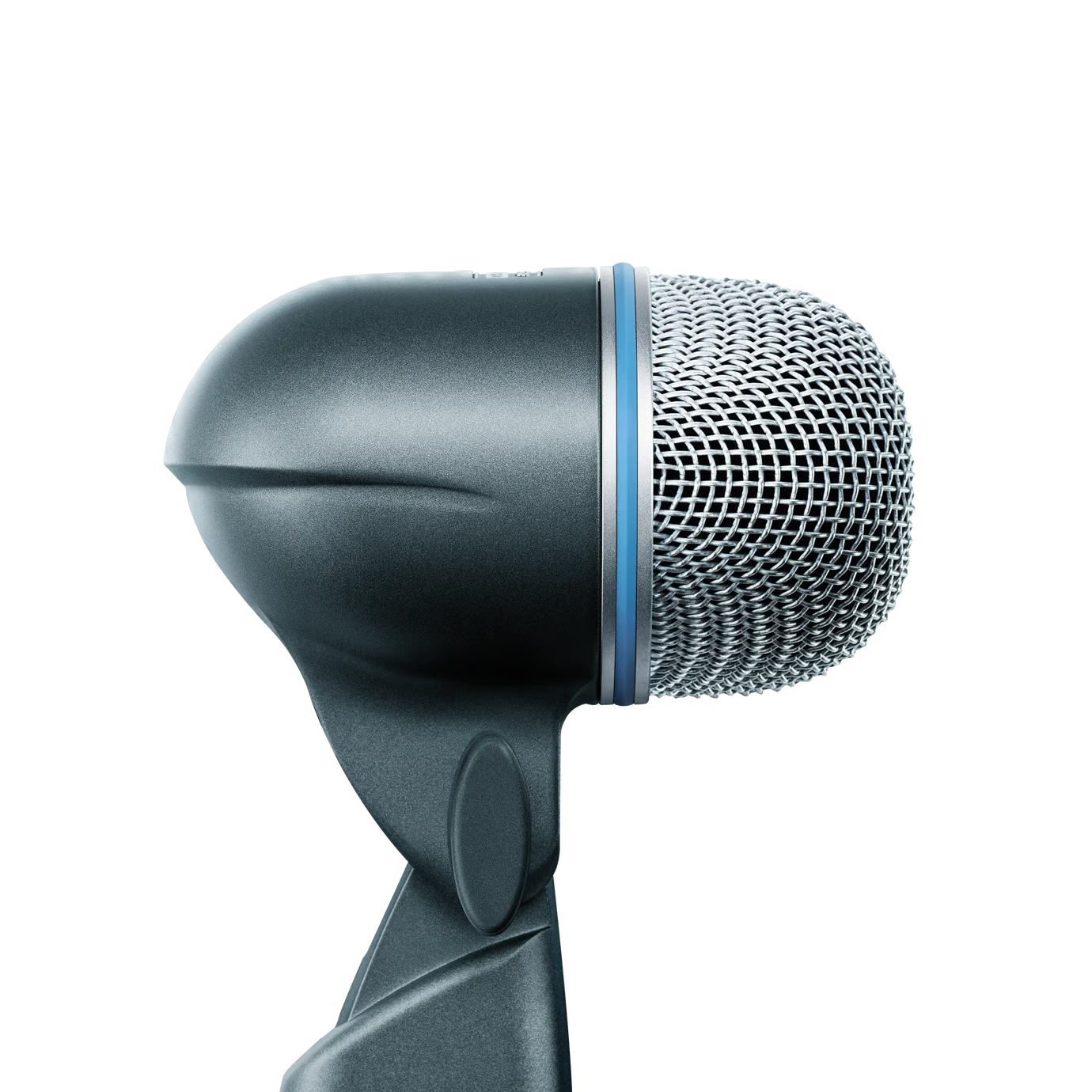



The Shure Beta 52A is a high-output supercardioid dynamic microphone designed specifically for kick drums and bass instruments. With a frequency response of 20Hz to 10kHz tailored for low-end punch and a presence boost at 4kHz for beater attack, the Beta 52A delivers the thump and clarity that makes kick drums sit properly in any mix. Built-in dynamic locking stand adapter with integral XLR connector simplifies setup—especially when placing the mic inside a kick drum—and handles up to 174dB SPL without distortion. Backed by Shure’s 2-year warranty and hardened steel grille construction for touring durability.
Why Drummers and Engineers Choose the Beta 52A
The Beta 52A is the go-to kick drum mic for professionals who need punch without spending hours on EQ. One recording engineer said it plainly: “The Shure Beta52a is my ‘go to’ kick drum mic for live or recorded drums. Its attack response gives you a punchy tone without any fuss, so you dont even need to put an EQ on it.” That’s the typical experience—you position the mic, plug it in, and it sounds right immediately.
Another user who’d tried everything over the years—Beyerdynamic, AKG D122 and 414, Rode, older Shures, Audix—came to a clear conclusion: “Don’t waste your time. Every live show that impresses me with bass drum tone uses a Beta 52A.” When someone who’s tested that many mics settles on the Beta 52A, that tells you something. It’s not the only good kick mic out there, but it’s the one that consistently delivers without needing extensive processing.
People who upgrade from cheaper kick mics notice the difference immediately. One drummer switching from the PGA 52 said: “I’ve Been using the PGA 52 for years on my StompBox & BucketBass Been Good, But WOW……What A Difference w the Beta 52a!! Really Thumpin Now.” The Beta 52A captures more detail in the low end while still delivering the attack that makes kick drums cut through dense mixes. It’s not subtle—you hear the improvement right away.
How the Frequency Response Works
The Beta 52A’s frequency response runs from 20Hz to 10kHz, which is perfect for kick drums and bass instruments. That 20Hz low-end extension captures the subsonic thump that you feel in your chest, not just hear. Most instrument mics roll off much higher—the SM57 starts at 40Hz, for comparison. The Beta 52A goes lower to capture the full weight of a kick drum or bass cab.
There’s a presence boost at 4kHz that brings out the beater attack without making it clicky or harsh. This is the “snap” that helps kick drums cut through guitars, bass, and vocals in a mix. One user noted: “It’s got tight thumpy lows, crisp top, and a bit of a mid scoop. Place it just right at the cusp of the port hole, slightly off axis if you wanna reduce clickiness, take a bit out at 400hz and you got yourself a pretty handsome sounding kick.” The mic gives you control over the tone just by moving it around.
The supercardioid pattern provides tighter rejection than standard cardioid mics. This helps isolate the kick drum from other kit pieces—especially important when you’re also miking toms, snare, and cymbals. The tighter pattern also increases proximity effect, so getting closer to the sound source adds more low end. One engineer mentioned: “Moving it in and around the kick drum, provides almost an infinite number of sounds, textures and attacks.” Small position changes give you different tones without needing EQ.
The Built-In Stand Adapter Makes Setup Easy
The Beta 52A has a built-in dynamic locking stand adapter with an integral XLR connector. This design solves a specific problem: when you put a mic inside a kick drum, it takes impacts from the beater hitting the head. Regular mic clips slip or break. The Beta 52A’s locking adapter resists slipping even when subjected to sharp blows and vibrations.
The adapter adjusts through 180 degrees and has a standard 5/8″-27 thread that fits any mic stand. The XLR connector is built into the adapter, so you just plug your cable directly into the mic—no separate clip needed. This makes positioning inside a kick drum much simpler. You’re not trying to angle a mic clip while reaching through a port hole. Just thread the adapter onto the stand, position it, lock it, and plug in.
The hardened steel mesh grille protects the large capsule from physical abuse. The grille isn’t just for looks—it’s designed to resist dents and damage from touring. One user specifically mentioned: “Its rugged design means it just keeps on working, no matter what you throw at it.” The Beta 52A weighs 21.6 ounces, which is substantial, but that weight comes from the die-cast metal housing and neodymium magnet that provide durability and high output.
Handling Extreme Volume Without Distortion
The Beta 52A handles 174dB SPL at 1kHz, which is louder than a jet engine at takeoff. For reference, the loudest kick drums hit maybe 130-140dB SPL. The Beta 52A has massive headroom. You can position it inside a kick drum with a hard hitter playing metal or put it on a bass cab cranked to full volume, and the mic won’t distort. The high SPL handling is one reason it works so well in high-energy genres.
The neodymium magnet provides high output, so you need less preamp gain. This keeps your signal cleaner and gives you more flexibility with gain staging. The output impedance is 150 ohms rated (45 ohms actual), which is lower than many dynamics. The low impedance helps carry the signal from mic to preamp with minimal loss, which matters when you’re running long cable runs on stages.
The advanced pneumatic shock mount system isolates the capsule from mechanical vibrations. This reduces handling noise and prevents the mic from picking up stage rumble or stand vibrations. When a drummer is hitting hard and the stage is shaking, the shock mount keeps those vibrations from coming through the mic. One user noted the mic’s ability to stay positioned even during aggressive playing, which speaks to both the shock mount and the locking adapter working together.
Real-World Applications Beyond Kick Drums
While designed for kick drums, the Beta 52A works great on bass cabinets. One user found: “We tried various microphones for the Fender precision bass with an Ampeg amp – B52a in conjunction with sure 57 is by far the best sound combination for a warm, punchy, cut thru mix bass sound.” The combination of a Beta 52A for low end and an SM57 for mids and highs gives you a full bass tone that works in dense mixes.
Floor toms sound huge through the Beta 52A. One engineer mentioned: “On top of being a great kick mic…it is one bad floor tom mic. It makes my 16-inch and 18-inch floor toms sound like cannons.” The extended low-frequency response captures the deep resonance of large toms while the presence peak brings out the stick attack. The supercardioid pattern helps reject bleed from cymbals and other drums.
Some engineers use the Beta 52A on bass-heavy instruments like tuba, bass saxophone, Leslie cabinets, and even upright bass. One user specifically mentioned using it on a Leslie 3300: “I was pleasantly surprised at how well this picked up the low end on my Leslie 3300. A great mic for the price and a great sound too!” The mic captures low-frequency instruments with authority. Another noted: “This mic is rightfully ballyhooed for kick drum and bass cabinets. That said, it is an interesting choice for mic-ing guitar cabs. Surprisingly broad frequency spectrum for a cardioid microphone.”
Positioning Techniques for Best Results
The Beta 52A gives you different tones based on positioning. Inside the kick drum near the beater head captures more attack and click. At the port hole captures more low-end boom. Slightly off-axis at the port reduces clickiness. One user described their technique: “Place it just right at the cusp of the port hole, slightly off axis if you wanna reduce clickiness, take a bit out at 400hz and you got yourself a pretty handsome sounding kick.”
Many engineers pair the Beta 52A with another mic for complete kick drum tone. The Beta 52A handles low end and punch, while a boundary mic like the Beta 91A inside the drum captures beater attack. One reviewer noted: “The combination of the Beta 52A with the Beta 91A boundary microphone is especially favoured, with the 52A typically handling the low-end while the 91A captures the attack, resulting in a full and balanced bass drum sound.” This two-mic approach gives you independent control over thump and click.
For bass cabinets, position the Beta 52A near the speaker cone for direct sound or back a bit for more room tone. The supercardioid pattern helps reject stage bleed when the cab is loud. The presence boost at 4kHz brings out string attack on bass guitar without needing heavy EQ. The mic works on both finger-style and pick playing, though the presence peak particularly helps picks cut through.
What Works and What Doesn’t
The Beta 52A excels when you need a kick drum to punch through a mix without getting lost in low-end mud. The tailored frequency response does most of the work—minimal EQ needed. It handles loud stages and high-energy music where other mics would struggle. The built-in adapter simplifies setup, especially inside kick drums. The SPL handling means nothing is too loud. These are the mic’s strengths.
The Beta 52A is bulky and heavy at 21.6 ounces. One user mentioned: “Only giving 4 stars, cause it is a bit bulky and awkward to position.” You need a stable stand—the weight will tip over lightweight boom stands. The mic isn’t ideal for all musical styles. One user compared it to the Audix D6 and Sennheiser e902: “The Beta 52a when recorded without any compression or EQ sounded like I was hitting a cardboard box. After I compressed and EQ’d it got better but it has a high click in the tone that the other 2 mics don’t have. The Audix D6 and Sennheiser evolution e 902 had a better sound out of the box.” For certain musical styles—particularly where you want less click and more natural tone—other mics might work better.
The Beta 52A has a specific character. It emphasizes low end and attack, with a mid scoop. This works great for rock, metal, and modern styles where you want kick drums to boom and punch. For jazz or acoustic styles where you want more natural, balanced tone, you might prefer a flatter response. The mic does what it’s designed to do—deliver big kick drum tone for contemporary music—but it’s not neutral or flat.
Connectivity and Setup
The Beta 52A has a 3-pin XLR male connector built into the stand adapter. It’s a dynamic mic, so no phantom power required—just plug in and go. The output impedance is 150 ohms rated (45 ohms actual), which works with any standard mic input. The neodymium magnet provides hot output, so you typically don’t need as much preamp gain as with other dynamic mics.
Setup is straightforward. Thread the built-in adapter onto your mic stand, position the mic where you want it (inside the kick, at the port hole, or in front), lock the adapter in position, and plug in your XLR cable. The dynamic locking system resists slipping even when the kick drum is taking hard hits. The 180-degree adjustment range lets you angle the mic exactly where you need it.
Studio and Live Performance Use
In the studio, the Beta 52A delivers professional kick drum tone without extensive processing. One engineer said: “Studio quality performance, even at extremely high sound pressure levels.” You can record hard-hitting drummers close to the source without overload. The frequency response gives you a modern kick drum sound that sits well in mixes across genres. Pairing it with a second mic gives you more tonal options during mixing.
For live sound, the Beta 52A handles the abuse of touring while delivering consistent tone night after night. The supercardioid pattern helps prevent feedback and rejects stage noise. The hardened steel grille protects the capsule from physical damage. The shock mount reduces handling noise and vibration. One user summarized the live use case: “Like all Shure mics, the Beta 52A is built like a tank, meaning that you can travel with it from gig to gig and rest assured that it will last.”
Comparing Beta 52A to Other Options
The Beta 52A competes with mics like the AKG D112, Audix D6, Sennheiser e902, and Electrovoice RE20. Each has different character. The Beta 52A emphasizes low-end thump and beater attack with a mid scoop. The D112 is scooped but with less click. The D6 is balanced with strong low end. The e902 is more natural and less processed-sounding. The RE20 is flatter and more neutral. Which one is “best” depends on your musical style and what tone you’re after.
One drummer who owned a D112 and switched to the Beta 52A said: “I’ve used a lot of kick mics, and had grown tired and less satisfied with my last one, a D112. I knew the 52A would be an improvement, and it definitely is.” Another who tested multiple mics preferred the D6 and e902: “I ended up choosing the Audix D6 but they were both very nice.” The Beta 52A has a specific sound profile—if that’s what you want, it delivers. If you want something different, other mics might suit you better. The key is knowing what tone you’re after.