

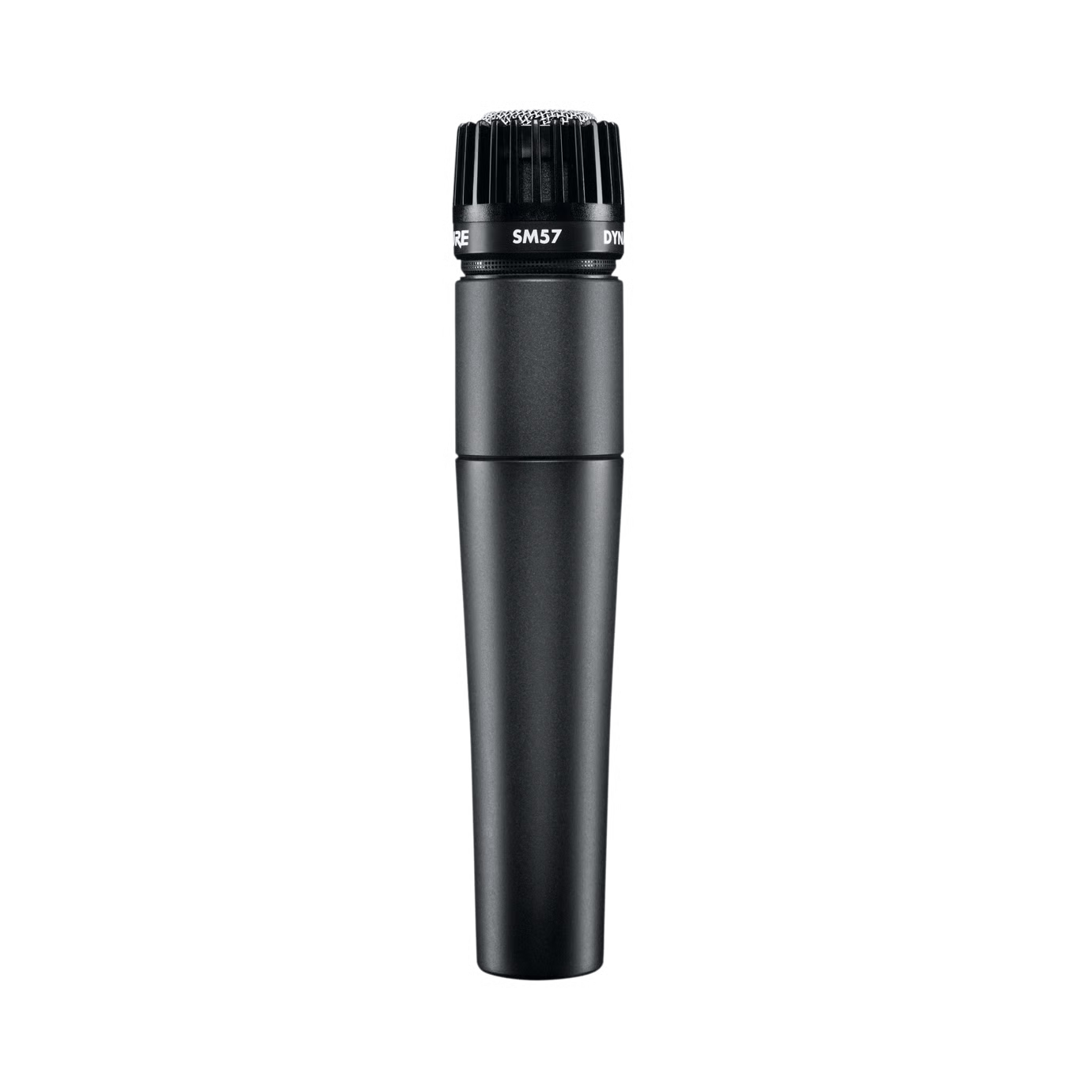
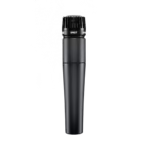

The Shure SM57 is the world’s most popular instrument microphone, used on countless hit recordings since 1965. Built for capturing guitar amps, snare drums, brass instruments, and vocals, the SM57 delivers a clear, punchy sound with a presence peak that helps instruments cut through any mix. Every U.S. president since 1965 has used SM57s for speeches, and it’s been the default choice in professional studios and on concert stages for over 50 years. Known for legendary durability and consistent performance, it’s backed by Shure’s 2-year warranty.
Why the SM57 is the Workhorse Everyone Owns
Walk into any professional studio or concert stage and you’ll find SM57s. One touring drummer put it simply: “The workhorse of sound reinforcement. These mics work well for everything.” Another engineer said: “If I had to only have one mic to do all of my recording this would be the one.” That’s not marketing talk—the SM57 is genuinely the most versatile dynamic microphone you can own.
The SM57 has been in production since 1965 without major design changes. It was inducted into the TEC Awards Technology Hall of Fame in 2004 after four decades of “solid, dependable performance.” One reviewer from Sweetwater noted: “What can I say that hasn’t already been said about the sm-57? A true legend and no matter what kind of music you are into, you have heard it.” The mic’s sound has defined how we hear recorded instruments for generations—countless hit recordings feature SM57s on snare drums and guitar cabinets.
People buy multiple SM57s because they need them everywhere. One user mentioned: “I bought two this go around and will buy a few more in the near future.” Another said simply: “The 57 needs no review and this just makes it easier to get more 57’s, which is something everybody should do.” When professionals who already own SM57s keep buying more, that tells you everything about how useful this mic is.
What Makes It Sound the Way It Does
The SM57 has a frequency response of 40Hz to 15kHz with a presence peak from 3kHz to 6kHz. This peak is why snares sound snappy, guitar amps have bite, and brass instruments have clarity. The mic captures the attack and body of instruments without sounding harsh. One guitarist using it on his combo amp said: “Good clean sound and easy to use. I’m placing it close to the amp’s grill near the center of the speaker and have been happy with the results.”
Below 200Hz, there’s a slight bass boost that’s useful for guitar cabinets and toms. Below 40Hz, the response drops off completely, which eliminates low-frequency rumble that would otherwise muddy your recordings. There’s also a small dip between 300-600Hz that reduces muddiness in the low mids. Above 9kHz, the response falls away gradually—the SM57 isn’t as bright as condenser mics, but for most instrument applications, this is actually helpful. It keeps distorted guitars and loud brass from sounding shrill.
The cardioid pickup pattern isolates the main sound source while rejecting background noise. This matters hugely for drums—one of the reasons the SM57 is the standard snare mic is that you can position it to reject the nearby hi-hat. One worship leader who uses SM57s on multiple instruments said: “Excellent pickup and frequency range. Durable and most certainly road worthy. A proven classic.” The tight pattern also helps prevent feedback on stages, letting you get higher gain before the PA starts feeding back.
The Flat Grille Makes a Difference
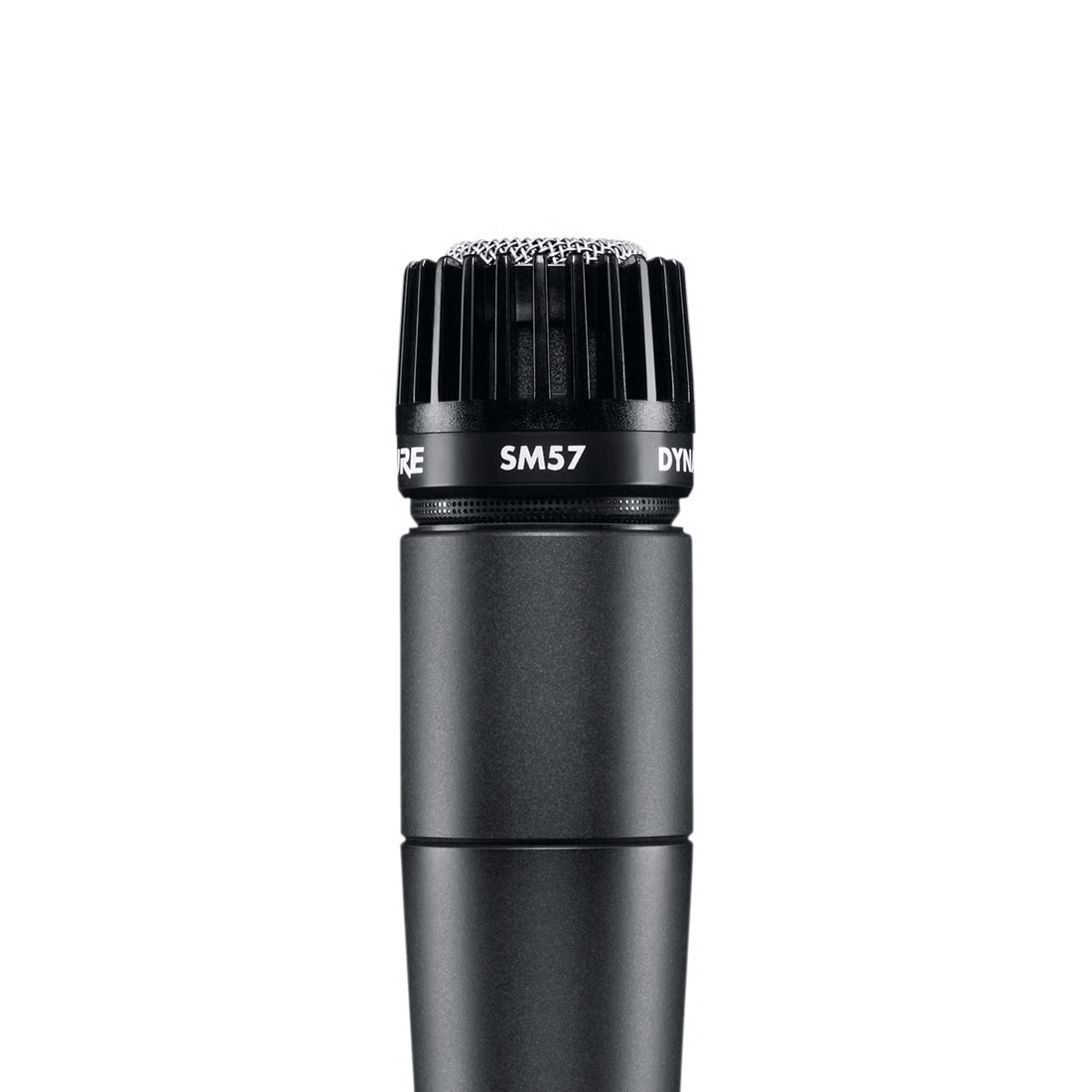
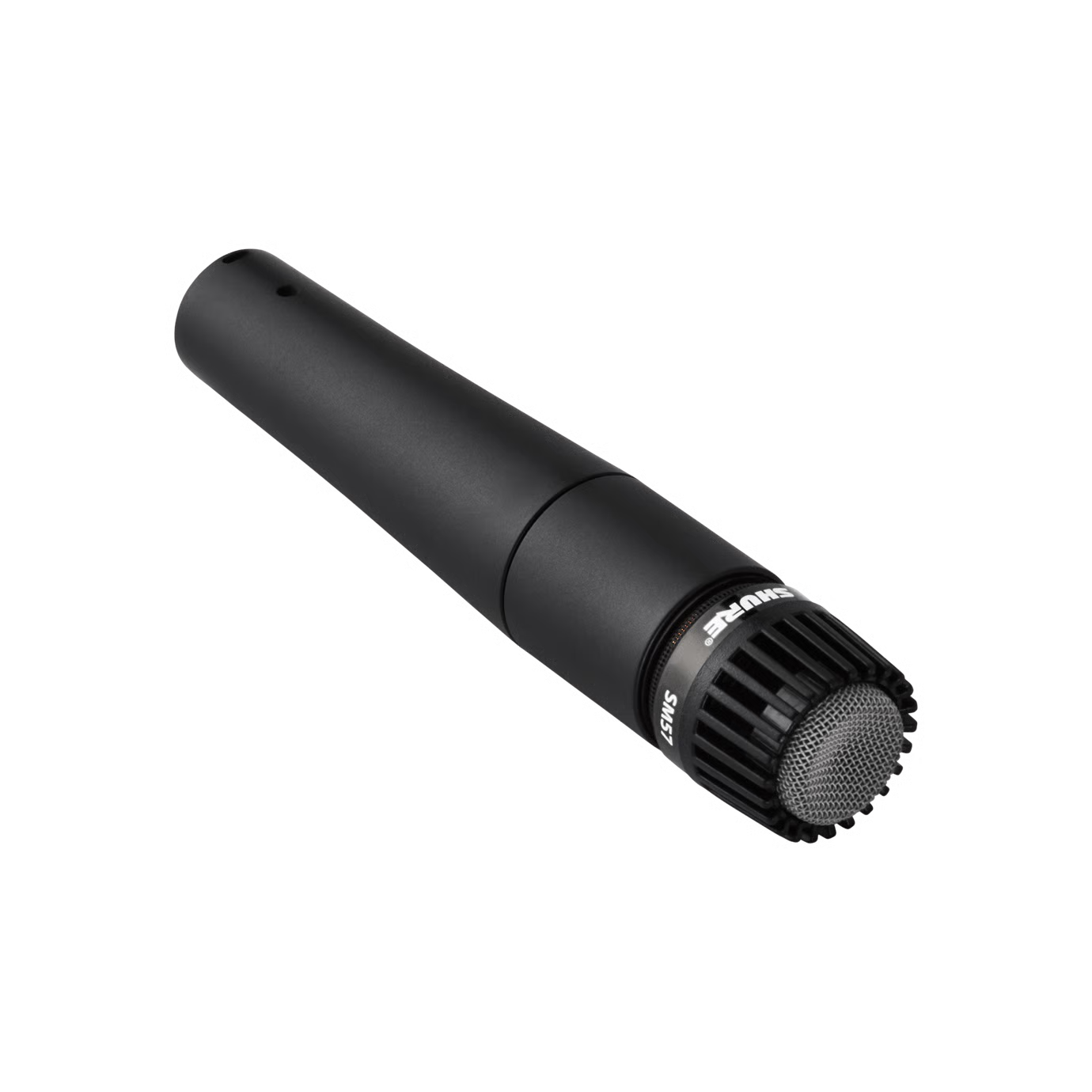
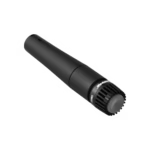
The SM57’s flat grille is what separates it from the SM58. Both mics use the same Unidyne III capsule, but the SM57’s short, flat grille lets you get closer to sound sources. This proximity increases bass response through proximity effect, which is why the SM57 sounds fuller on guitar cabs when you place it right against the grille. The SM58’s round ball grille limits how close you can get.
For guitar amps, this matters. You can position the SM57 right against the speaker grille and move it around to find the sweet spot—near the center for more bite, off to the side for less harshness. One reviewer mentioned using it exactly this way: “I’m using the Shure SM57 microphone to mic the speaker on my combo guitar amp, and so far it works great.” The flat grille also works better on snare drums where you need to angle the mic between hi-hat and rim.
The grille is made from polycarbonate with a stainless steel screen. It’s not as tough as the Beta 57A’s hardened steel grille, but it holds up fine. The die-cast steel body provides the real protection. One MusicRadar reviewer noted: “This is evidently a microphone designed to withstand all manner of abuse, from being dropped, knocked over, stood on and generally not wrapped in cotton wool.” The famous Shure drop test—where employees dropped an SM57 from a seven-story window and it still worked—isn’t just legend.
Handling Loud Sources Without Distortion
The SM57 can handle absurd sound pressure levels. According to Shure, it handles 150dB SPL at 100Hz—louder than a jet engine. At 1kHz, it handles around 160dB SPL. At 10kHz, theoretically 180dB SPL (the level of a space shuttle launch). This means nothing is too loud for the SM57. You can put it on a 100-watt tube amp cranked to full volume without any distortion.
This SPL handling is why engineers reach for it first on loud sources. One drummer who’d tried regular vocal mics on drums switched to SM57s and said: “The day I received the SM 57’s was one day before our first gig at a local venue…At soundcheck, the whole band realized the difference these microphones made to the drum sound…especially with comments after the gig such as, ‘the drums sounded very professional.'” The SM57 captures loud instruments cleanly when condensers would overload.
The tradeoff is that the SM57 needs more preamp gain than condensers. It requires about 56dB of gain to reach line level. This is achievable on most interfaces and mixers, but if you’re working with quiet sources or low-gain preamps, you might need something like a Cloudlifter. For instruments—which are the SM57’s intended use—this isn’t an issue. Guitar amps, drums, and brass provide plenty of volume.
Where the SM57 Excels
The SM57 is the standard snare drum mic. Engineers commonly use one SM57 on the top head and another on the bottom head (phase-reversed) for a fat, snappy tone with plenty of stick attack and snare buzz. It works great on toms as well—the presence peak captures the attack while the bass handling captures the body. The tight pattern helps isolate individual drums in a kit.
For guitar cabinets, the SM57 is often the first mic engineers try. One professional noted: “If you’re miking a guitar amp, snare drum, or brass instrument and aren’t sure which mic to use, throw up an SM57. It may not deliver mind-blowing results, but it will always sound good.” The flat grille lets you position it right against the speaker grille to capture the amp’s character. Many classic rock and metal tones were captured with SM57s.
Brass instruments sound excellent through SM57s. The presence peak brings out the bright, cutting quality of trumpet, trombone, and saxophone without harshness. One user mentioned using SM57s on “congas, percussion, sax, clarinet, and trumpet” with excellent results. Woodwinds work well too—the frequency response captures the body and articulation of clarinet, flute, and other instruments.
Surprisingly, the SM57 works for vocals. The capsule is identical to the SM58—the only difference is the grille. One reviewer who’s been using SM57s for 10 years said: “This mic can be used for anything from live/studio vocals, snare drums, live amps, and more.” The flat grille lacks the SM58’s pop filter, so you’ll need good mic technique or an external pop filter for recording vocals, but the sound quality is there.
Acoustic Instruments and Beyond
The SM57 works on acoustic guitar, though it’s darker than condensers. One church ordered it specifically to mic acoustic guitar and reported: “It works like a charm! Everyone has commented how well they can hear the music, and it doesn’t overpower the vocals. Clear, clean sound with no feedback.” The cardioid pattern helps prevent feedback in live situations where condenser mics would pick up too much stage noise.
Some engineers pair the SM57 with a condenser for acoustic instruments. Position the SM57 around the 12th fret pointing toward the sound hole for warmth and body, then add a condenser near the bridge for brightness and detail. This combination gives you the best of both worlds—the SM57’s darker tone fills out the low end while the condenser adds sparkle.
The SM57 also works on sources you wouldn’t expect. Engineers use it on piano, harmonica, percussion, and even as room mics. One Mercenary Audio engineer said: “My favorite microphone ever made is the Shure SM57. It’s rarely ever ‘genius’ but it never ever totally sucks. You can point one in the general direction of a sound and you’ll get a pretty decent representation of that sound.” For home studios and project studios, this versatility is invaluable—one mic that works on everything means you can start recording without owning dozens of specialized microphones.
Connectivity and Setup
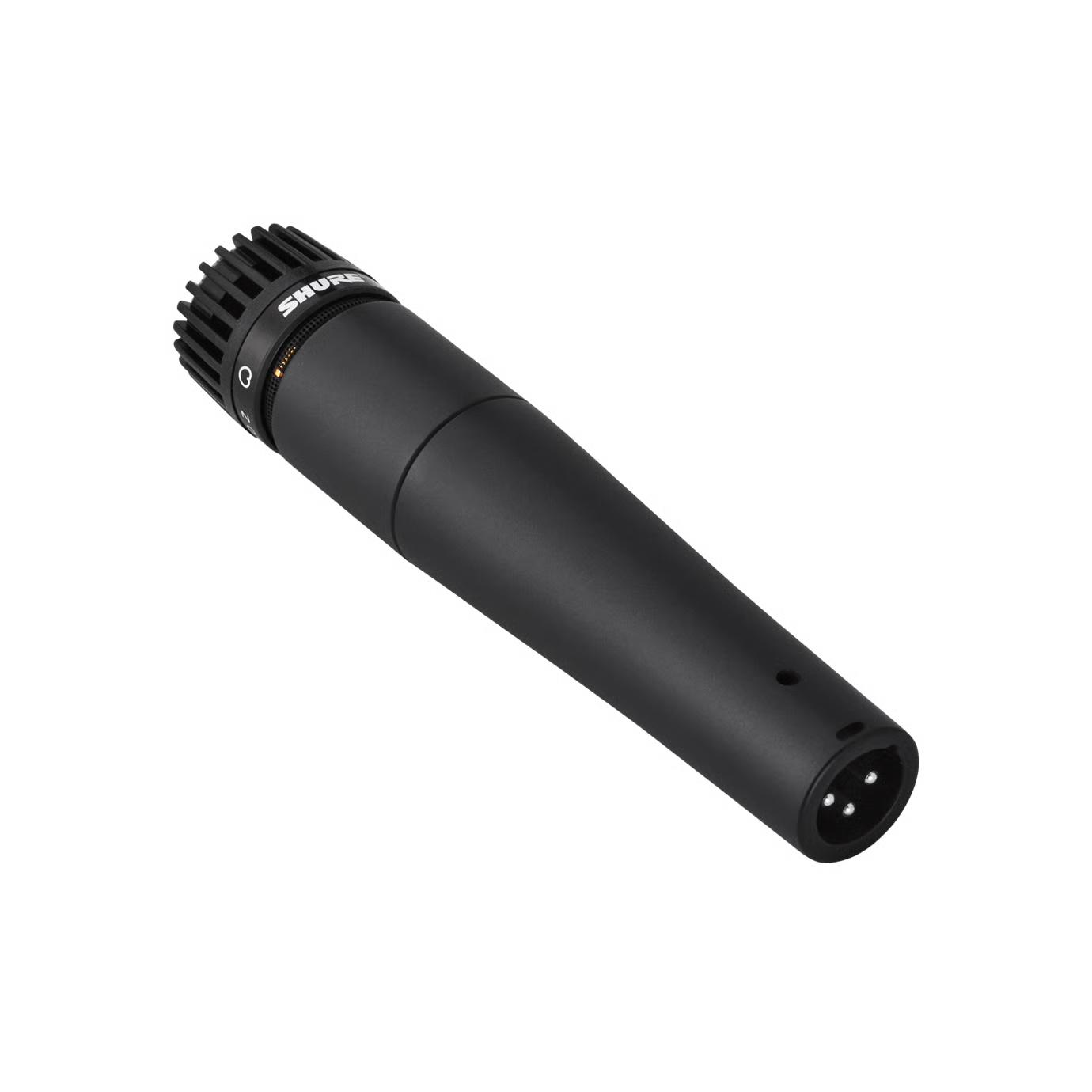
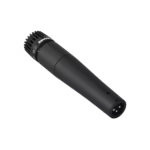
The SM57 has a standard 3-pin XLR male connector. It’s a dynamic mic, so it doesn’t require phantom power—just plug it into any mic input and go. The output impedance is 150 ohms rated (310 ohms actual), which is standard for professional microphones and works with any mixer, interface, or preamp.
The included mic clip adjusts 180 degrees and has a standard 5/8″-27 thread that fits any mic stand. The clip is break-resistant—one user mentioned: “Bulletproof. Works well enough for my drums or guitar.” Setup takes seconds. Point the SM57 at your sound source, plug in the cable, and adjust your gain. There are no switches, no pad settings, no complicated features. It’s simple by design.
Durability That Lasts Decades
The SM57’s durability isn’t hype. The die-cast steel body, internal pneumatic shock mount, and proven design mean these mics last for decades. People report using the same SM57 for 20, 30, even 40 years. The shock mount reduces handling noise and protects the capsule from impacts. One reviewer mentioned: “I’ve been using SM57’s for the greater portion of 10 years and have never been failed…Not to mention they are extremely durable and can take quite a beating.”
The SM57 handles drops, bumps, temperature extremes, and moisture better than most mics. The internal design isolates the capsule from mechanical shocks. The grille protects the diaphragm from physical contact. One YouTube content creator who needed something reliable for capturing acoustic guitar said: “This was a fantastic solution for my audio capture problem on my YouTube channel.” When you need something that just works without babying it, the SM57 delivers.
What to Know About the Current Production
SM57s manufactured since 1985 are made in Mexico, not the USA. Shure claims quality has improved since the move, though some engineers prefer older US-made units (identifiable by “Unidyne III” printed on the ring near the capsule). Current SM57s show only “Shure SM57” on the body. The sound is consistent—Shure builds them to tight tolerances so any SM57 sounds like any other SM57.
Watch for counterfeits. The SM57’s popularity means fakes exist, often from China and Thailand. Buy from authorized dealers. Genuine SM57s feel substantial (10 ounces), have clean build quality, include proper accessories, and deliver the expected sound. If the price is too good to be true or the seller isn’t authorized, question the source. One Guitar Center review specifically noted counterfeit concerns: “There is no logo or brand stating ‘Shure’ or ‘SM57’ anywhere on the microphone” when describing a fake unit.
SM57 vs SM58: Which One?
The SM57 and SM58 use the same capsule. The SM58 has a round ball grille with built-in pop filter, making it better for handheld vocals. The SM57 has a flat grille that lets you get closer to instruments. If you’re primarily recording instruments, get the SM57. If you’re primarily doing vocals, get the SM58. Many engineers own both because they’re so affordable. Some people just buy SM57s for everything—you can use it on vocals if you add a pop filter, and it’s more versatile for instruments.
